
One of the most challenging moments for parents is when a child says: "I don't want to!" I don't want to sleep. I don't want to eat. I don't want to do homework. I don't want to get dressed. I don't want to put the tablet away. Often, an adult's first instinct is to respond automatically: "Yes, you have to!", "Don't argue!", "If you don't do it, I'll punish you!" But behind a child's refusal, there is frequently an emotional message worth understanding. A "no" is not just a refusal. It is a form of communication. Depending on the child's age, this "no" can carry different meanings. In young children, between 1 and 3 years old, "no" is often the beginning of autonomy. The child discovers that they are a separate person from the parent, that they can have their own will, that they can influence the world around them. When they say "no," they may be communicating: "I exist too," "I want to choose," "I want to feel like I have a little control." At the preschool age, between 3 and 6 years old, "no" frequently appears as a testing of limits. The child wants to see how firm the adult is, what happens if they refuse, how much they can negotiate. At this stage, the parent needs to remain calm and firm, without turning every refusal into a power struggle. For younger school-age children, between 6 and 10 years old, "I don't want to" can hide frustration, tiredness, or fear of making mistakes. When a child says "I won't do my homework," the real message is sometimes: "it's hard for me," "I don't know how to start," "I'm afraid I won't get it right." In pre-adolescence and adolescence, "no" can become a way of asserting identity. The child begins to need personal space, their own opinions, autonomy, and respect. Sometimes, behind their "I don't want to talk" lies the need not to feel controlled, intruded upon, or judged. This is why it is important not to immediately label the child as "bad," "naughty," or "disobedient." A child who says "no" is not automatically a difficult child. They may be a tired, frightened, frustrated, or overwhelmed child — or a child trying to express a need with the tools available to them at their age. This does not mean the parent must accept every refusal. Children need to know that their voice matters, but they also need clear boundaries. We can say: - "I understand you don't want to sleep. You'd rather keep playing. Still, it's bedtime."* - "I know you want to go outside. The homework still needs to be done. Let's see how we can break it up."* - "I understand you don't like the food. I'm not forcing you to eat everything, but this is today's menu."* - "You're angry. You're allowed to be angry, but you're not allowed to hit."* One very important principle: all emotions are permitted, but not all behaviors are permitted. The child is allowed to be angry, sad, disappointed, or frustrated. But they are not allowed to hit, insult, or destroy things. The parent's role is to validate the emotion and limit the inappropriate behavior. When a parent shouts, threatens, or punishes, the child may become even more reactive. In the short term, they may comply. In the long term, however, they may learn that their emotions are not accepted, that the relationship becomes unsafe, or that power is imposed through fear. Of course, no parent is perfect. What matters is that when we make mistakes, we can repair: *"I'm sorry I shouted. I was upset, but it wasn't okay to speak like that. The boundary stays, but I can communicate it more calmly."* A child needs two pillars: connection and limits. Connection alone, without limits, can lead to chaos. Limits alone, without connection, can lead to fear or opposition. The healthy balance is to listen to the message behind the refusal, while remaining the adult who can guide with calm. Perhaps, before asking "Why won't you listen to me?", it would be helpful to ask ourselves: "What is my child trying to tell me through this NO?" Because, more often than not, behind an "I don't want to" lies an "it's hard for me," "I need you," "I want to matter," or "I don't know how to handle what I'm feeling." Children are not born knowing how to regulate anger, frustration, or opposition. They learn this through their relationship with the adults in their lives. And a "NO" can be not just a moment of conflict but also an opportunity for understanding, growth, and connection.
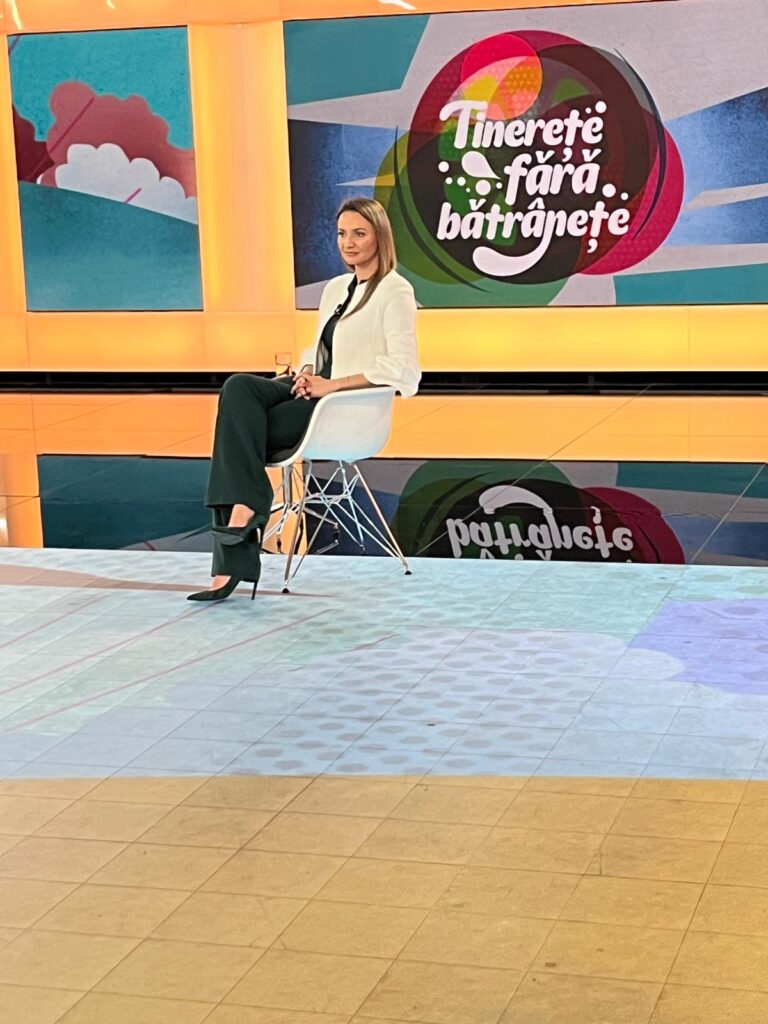
Psychologist Carmen Mariana Ardeleanu

